A Change in Tempo
There is a particular kind of confusion that shows up in therapy rooms, often without drama and almost never as a clear complaint. Someone is doing all the right things.
✅ They are showing up.
✅ They are reflecting.
✅ They are reading the books.
✅ They are practicing the exercises,
✅ They are trying, genuinely trying, to live differently.
And yet something still feels off. Not broken exactly. More like rushed. As if life is constantly half a step ahead of them, even when nothing urgent is happening.
Trauma moves fast. That is one of its defining features.
It arrives without invitation, without preparation, and without consent. The nervous system does not pause to ask whether now is a good time. It reacts. It mobilizes. It narrows attention. Speed is not a personality trait in trauma. It is a survival response. The body learns, very efficiently, that moving quickly keeps you safer than slowing down long enough to feel what is actually happening.
Healing, unfortunately, does not work that way. Healing asks for something trauma never offered: choice. And choice takes time. Not metaphorical time. Actual, lived, slowed-down time where the nervous system has enough room to register what is happening without immediately having to defend against it.
This mismatch in tempo is where many people get stuck. They try to heal with the same urgency that once helped them survive, and then wonder why the work feels exhausting or strangely ineffective.
In the trauma research world, this pattern shows up again and again, even if it is not always named this directly. Large narrative reviews of psychotraumatology (warning…gonna get nerdy for a bit) over the past decade consistently note that symptom persistence is less about a lack of insight and more about ongoing physiological arousal and threat perception that never fully downshifts. People understand what happened. They know their story. What has not changed is the speed at which their system is operating. The body is still bracing for impact, even in moments that are objectively safe.
What makes this especially tricky is that speed often masquerades as motivation. We live in a culture that quietly rewards urgency. Fast learners. Fast responders. Fast processors. So when someone brings that same tempo into their healing process, it can look like commitment. But internally, it often feels like pressure. A subtle sense that if you slow down, something bad might happen. Or worse, that you might fall behind yourself.
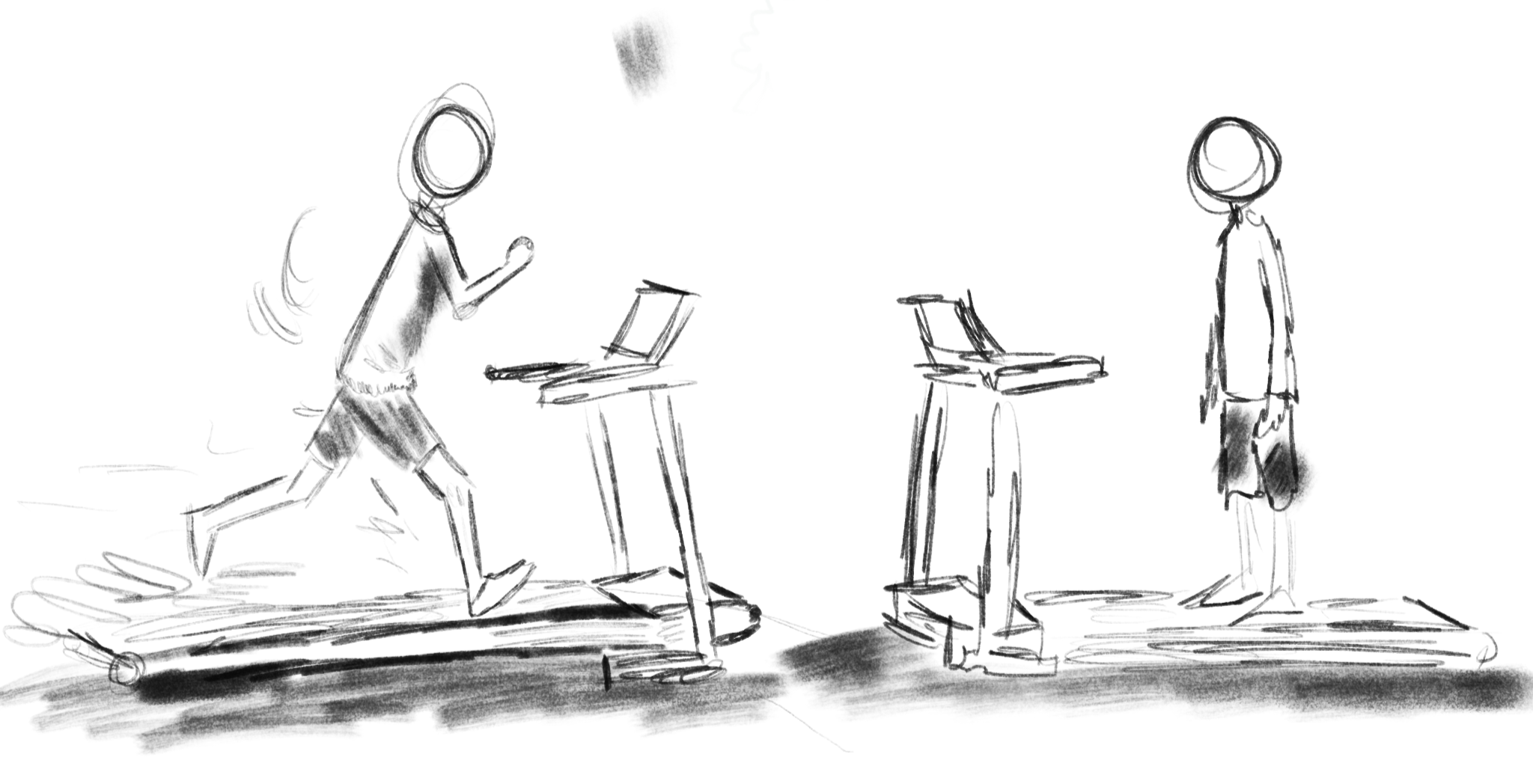
One part of us keeps moving at survival speed while another begins to notice that the threat has already passed.
Clinically, this shows up in familiar ways. Anxiety that spikes not because something is wrong, but because nothing is demanding attention. PTSD symptoms that soften only when life is chaotic enough to justify the internal pace. A constant sense of being late, even when there is nowhere specific to go. The nervous system has learned that stillness is not neutral. It is suspicious.
Research on embodiment and trauma recovery has been pointing toward this for some time. Qualitative studies (…getting a lil more nerdy again) examining self-directed, nonattachment-based interventions consistently find that change does not occur through insight alone, but through a gradual reorientation toward the body as a source of information rather than something to override. Participants describe improvement not as a breakthrough, but as a slowing. A widening. An ability to stay with small sensations without needing to resolve them immediately. Meaning-making follows regulation, not the other way around .
This is why asking someone to “calm down” rarely helps. Calm is not a switch. It is an outcome of safety perceived over time. When healing is rushed, the body experiences it as just another demand. Another performance. Another thing to get right. And the system responds accordingly, with more vigilance, more effort, and more fatigue.
There is a deceptively simple practice we often return to in this work. Do one ordinary thing at half speed. Not as a productivity hack. Not as mindfulness theater. Just slower than usual. Washing dishes. Brushing your teeth. Walking from the car to the door. At first, this feels irritating. Then boring. Then strangely uncomfortable. And then, if someone stays with it long enough, something else happens. Sensations reappear. Tension becomes more specific. Thoughts stop racing quite so far ahead of the body.
This is not about doing less. It is about giving the nervous system a tempo it can actually learn from.
From a physiological standpoint, slower, voluntarily chosen movement reduces sympathetic dominance and allows parasympathetic processes to come online without being forced. Over time, this lowers baseline arousal and improves discrimination between actual threat and remembered threat. In plain language, the body stops treating every moment like an emergency simply because it has the chance to experience moments that are not.
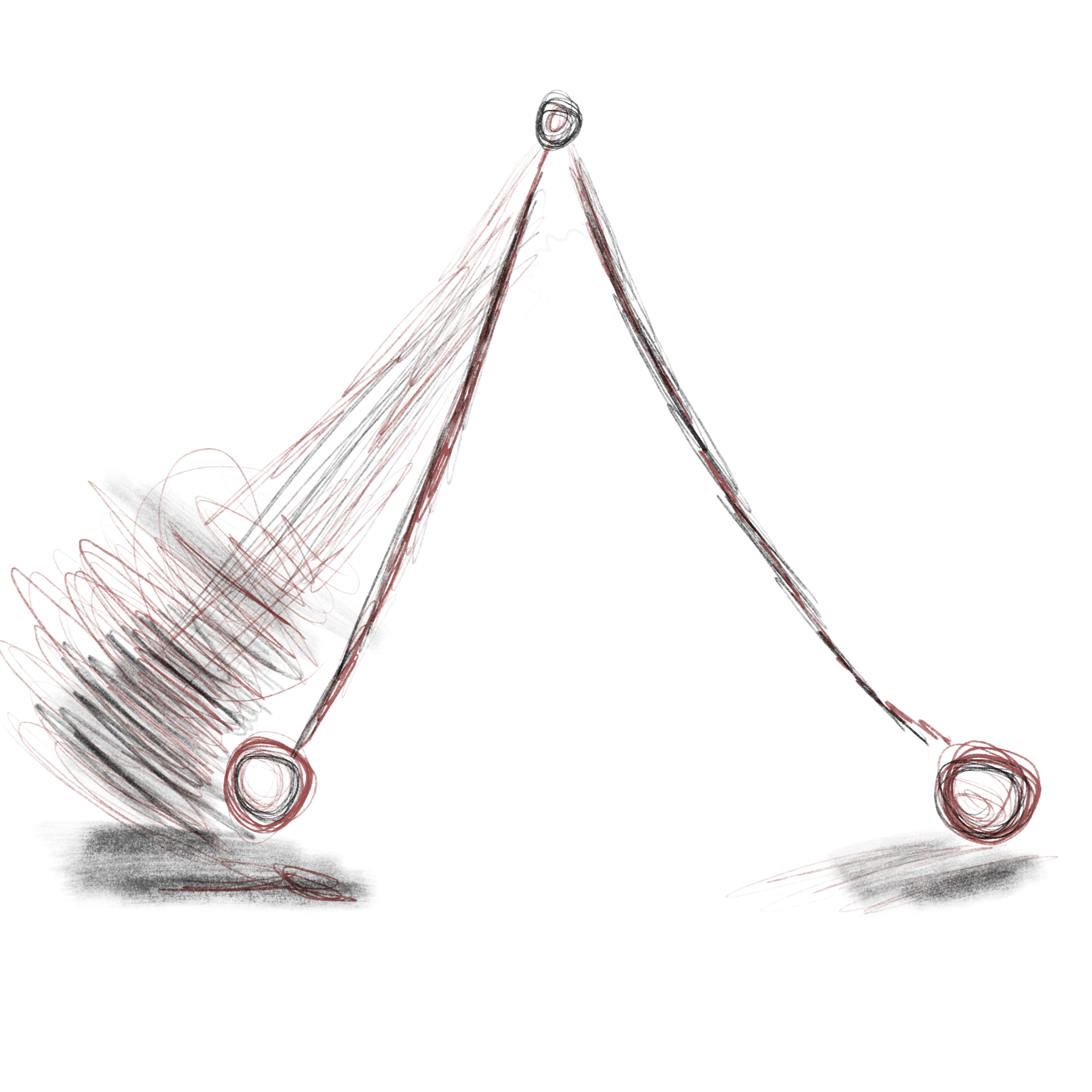
The nervous system does not move from chaos to calm instantly. Regulation is learned through rhythm.
The trauma literature increasingly emphasizes this point, even when using different language. Across hundreds of randomized controlled trials, what predicts sustained improvement is not intensity, but integration. Interventions that allow for pacing, relational safety, and bodily awareness consistently outperform those that rely on exposure alone or cognitive insight without physiological grounding. The data is clear on this, even if popular culture has not quite caught up yet .
This matters because many people blame themselves when healing feels slow. They assume they are resistant, avoidant, or doing it wrong. In reality, they may simply be trying to heal at the same speed that once kept them alive. And that speed, while adaptive then, is often the very thing that keeps the nervous system from updating now.
You cannot outpace trauma into resolution. You can only outgrow it by moving slowly enough for your body to realize that the danger has passed.
When tempo changes, something subtle but important follows. Choice returns. You notice tension earlier. Emotion arrives with less force. Decisions feel less urgent and more intentional. Life stops feeling like a series of reactions and starts to feel, gradually, like something you are participating in rather than enduring.
This is not a dramatic process. There are no fireworks. No instant transformations. Just a quiet reorganization of timing. And over time, that timing becomes the medicine.
If this resonates, it is not because you need another technique. It is because your system may be ready for a different pace. Slower than what hurt you. Slower than what you learned to survive. Slow enough to heal.
And that is not weakness.
It is precision.
+++++++++++++++++++++
P.S.
A quick note on words.
As I was writing this, then reading it, then rereading it (yes, I really am like that), I kept coming back to how slippery some of our shared language has become. Certain words show up everywhere now. Trauma. Nervous system. Regulation. Integration. Authenticity. They’re spoken with confidence, repeated with urgency, and often used to gesture at something important without ever quite naming it.
This isn’t malicious as a phenomenon. It’s cultural. When language travels faster than understanding, words start to blur. They become shorthand, then vibes, then catch-alls for things we don’t yet know how to articulate. Before long, a word that once pointed to something precise is carrying ten different meanings, depending on who’s using it and where you heard it last.
So rather than assume we all mean the same thing, I want to slow it down here.
What follows is not a dictionary. It’s a clarification. These are the ways I’m using certain terms in this piece, informed by clinical training, research, teaching, and a very human attempt to make sense of experience without flattening it. If you’ve encountered these words elsewhere and felt confused, frustrated, or quietly skeptical, you’re not wrong. Language matters. Especially when we’re talking about bodies, suffering, and change.
Think of this as a shared reference point. Not the final word. Just the one I’m standing on while writing.
A Few Words, Defined Carefully
Trauma
Clinically, trauma is not defined by the event itself, but by the nervous system’s response to it. Trauma occurs when an experience overwhelms a person’s capacity to respond, integrate, or recover, leaving lasting physiological and psychological effects. Two people can live through the same event and only one may be traumatized. This is not about toughness. It’s about capacity, context, and timing.
In everyday language, trauma has come to mean “something that was really hard.” While that’s understandable, it flattens an important distinction. Trauma is not just distress. It’s distress that reorganizes how the body predicts safety and threat going forward.
Nervous System
When I use this term, I’m not talking about a vague energy field or a personality type. I’m referring to the very real biological systems that regulate arousal, attention, emotion, movement, and social engagement. Your nervous system is constantly scanning for safety and danger, often outside of conscious awareness. It sets the tone for how fast you move, how deeply you breathe, how quickly you react, and how easily you recover.
You don’t “control” your nervous system in the way pop culture suggests. You relate to it. And over time, that relationship can change.
Regulation
Regulation does not mean being calm all the time. It means having enough internal flexibility to respond to what’s happening without becoming overwhelmed or shut down. A regulated system can speed up when necessary and slow down when possible. It notices shifts early and adjusts before things escalate.
If calm is the absence of waves, regulation is knowing how to surf.
Integration
Integration is the process by which experiences become part of a coherent whole rather than remaining fragmented, reactive, or isolated. In trauma work, this often means that memories, sensations, emotions, and meanings that were once disorganized can be felt and understood without hijacking the present moment.
Integration is not forgetting. It’s remembering without reliving.
Embodiment
Embodiment refers to the ability to sense, interpret, and respond to internal bodily signals with some degree of clarity and trust. This includes awareness of breath, posture, tension, movement, and emotion as they arise in the body, not just as ideas in the mind.
Embodiment is not about being hyper-focused on sensations. It’s about having access to them when they matter.
Tempo
Tempo, as I’m using it here, refers to the speed at which a nervous system operates by default. How fast you move, think, speak, decide, and recover. Trauma often trains a fast tempo because speed can be protective. Healing frequently involves learning when and how to slow that tempo without triggering threat.
Tempo is not laziness or discipline. It’s physiology with a history.
Urgency
Urgency is the felt sense that something must happen now or else. In trauma-related patterns, urgency often persists even in the absence of immediate danger. It can drive productivity, caretaking, overfunctioning, and chronic stress. Urgency is not always wrong. But when it becomes the baseline, it narrows choice.
Choice
In this context, choice does not mean unlimited freedom or perfect agency. It means having a moment of space between stimulus and response. Enough time to notice what’s happening before acting. Choice grows as regulation improves and tempo becomes more flexible.
If you find yourself reacting to these definitions, that’s worth noticing too. Language doesn’t just describe experience. It shapes what we think is possible. My hope is that clarifying these terms doesn’t close anything down, but opens up a little more room to think, feel, and experiment with care.
And yes, I’ll keep adding to this list. Words deserve that kind of attention.